
End of Chevron Deference: Implications for Natural Gas Regulation and Market Dynamic
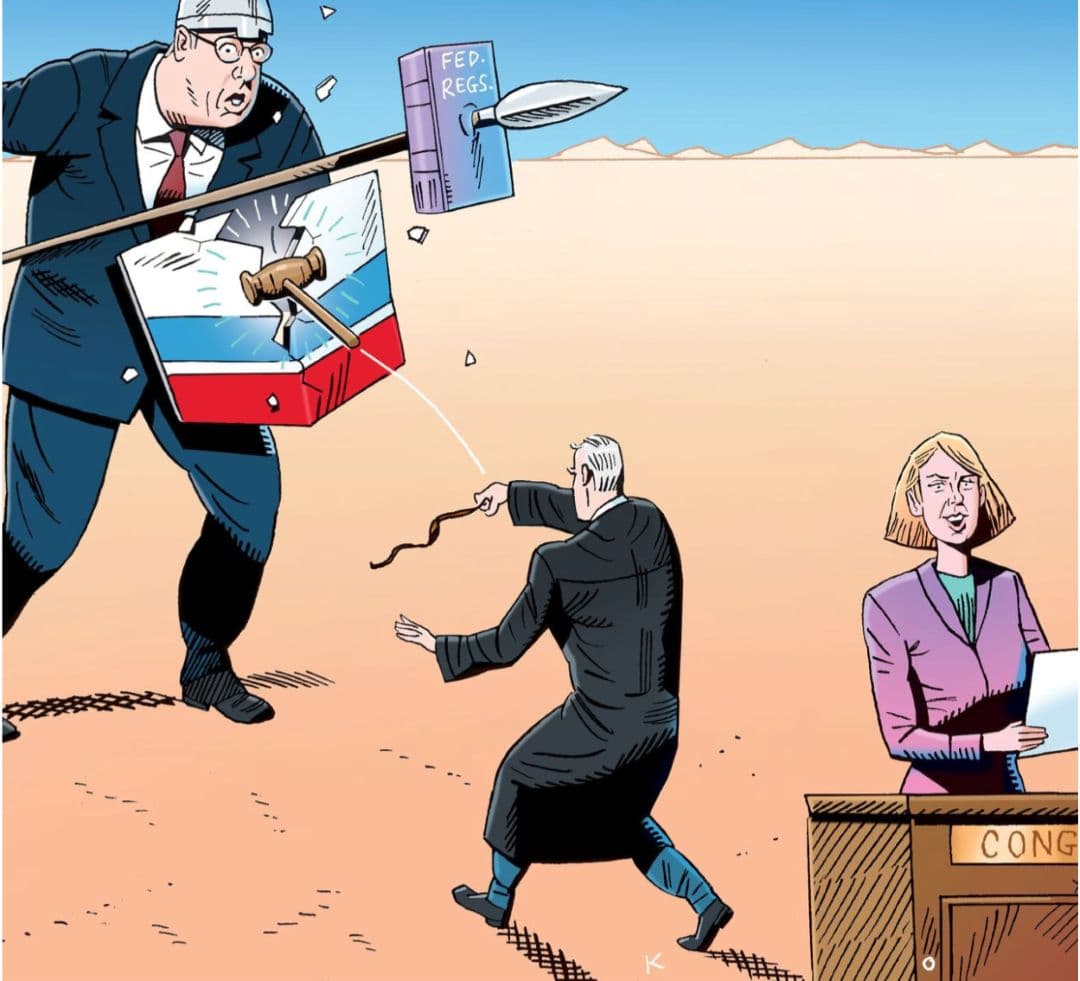
Image courtesy of the Wall Street Journal
Note: this article was first published in our July 2024 Monthly Journal.
The overturning of Chevron deference late last month marks a significant change in the regulatory landscape, as the doctrine had been used for more than 40 years by the courts to interpret unclear statutes. The doctrine comes from a Supreme Court ruling in a 1984 case Chevron USA v. Natural Resources Defense Counsel case, in which the Supreme Court found that (in simple terms) courts must defer to agency interpretations of unclear statutes. As a result, agencies had large amounts of authority when administering policy; the doctrine meant that their interpretations would be largely protected in judicial proceedings, so long as those interpretations were reasonable and no clear alternative existed elsewhere in the legislation. One criticism of the doctrine was that this created something of a feedback loop; because agencies were there to fill in the gaps, lawmakers no longer viewed vagueness in their legislation as a large risk, encouraging further ambiguity and therefore more usage of Chevron deference.
With the doctrine now overturned, courts will be taking a more active role in interpreting statutes where agencies once had. Existing laws which relied on agency interpretations may be undone or sharply re-interpreted if they see judicial review. As a result of this, industry players will find new avenues to contest agency actions. The pace of new regulation will also slow, for two separate reasons: firstly, lawmakers will need to tighten their language when drafting new legislation, as they can no longer rely on agencies. Secondly, in the cases where ambiguities remain, court proceedings around regulatory legislation will also take longer as courts need to come up with their own interpretations. These impacts combined mean that natural gas may experience a very accommodating regulatory environment in the coming years.
In general, regulation creates higher production expenses and that cost is partially passed down to the end user, resulting in higher prices. The logical extension would be the view that less regulation is bearish, because higher production efficiency means more supply. But the current situation in natural gas is not that simple. Producers’ output this year has not been constrained by regulation, but by their price expectations. What has been more impacted by regulation is LNG. The Biden admin istration recently paused Department of Energy authorization of exports from new LNG projects, slowing & delaying project approvals which has also dissuaded would-be investors.
Following the overturn, that pause has been undone in Louisiana federal court; other states could follow. The Biden administration has said its pause was in order to review LNG policy and the climate impacts of the sector, indicating the potential for a future regulatory burden, but the overturning of Chevron deference may decrease that burden’s magnitude.
Overall, the impact of overturning Chevron deference is multifaceted and wide-reaching. By shifting the interpretive power from agencies to the courts, the regulatory environment will undergo signif icant changes. While this may slow the pace of new regulations and require increased legislative clarity, it also introduces uncertainty as courts establish new precedents
Keep Reading
More from Gelber & Associates


European Natural Gas Storage and Winter Weather Expectations
European natural gas storage is in a solid position but behind the exceptional pace of recent years. As of early August, EU storage stands near 70% full, well below the ~90% reached at this time in 2024 and 2023.

Summer 2025 Weather Outlook: Data Centers & ERCOT Guidance
According to the National Weather Service, the May‑June‑July temperature outlook favors above normal heat across most of the United States for this upcoming summer.